Howdy
Roku's new streaming app
Designing a core experience for Roku’s new mobile streaming app, Howdy.

Bringing Howdy to mobile
Howdy is Roku’s new streaming service, launched in late 2025. With millions of subscribers on the TV, it became a business priority to create a mobile app. Roku already had a mobile app with a different purpose, so we utilised what we knew about this app to accelerate the decision making for Howdy.
Problems
Short timeframe: the design and build had to be completed in 6 months, so it required accurate scoping and fast decision making.
Technical limitations: the app needed to be built upon the existing Roku mobile app infrastructure, which meant that most behaviours carried over constrained what was possible.
A fresh identity: Howdy is a subscription based streaming app and as users have different expectations to the utility-focused Roku app, the design needed to look and feel meaningfully different.
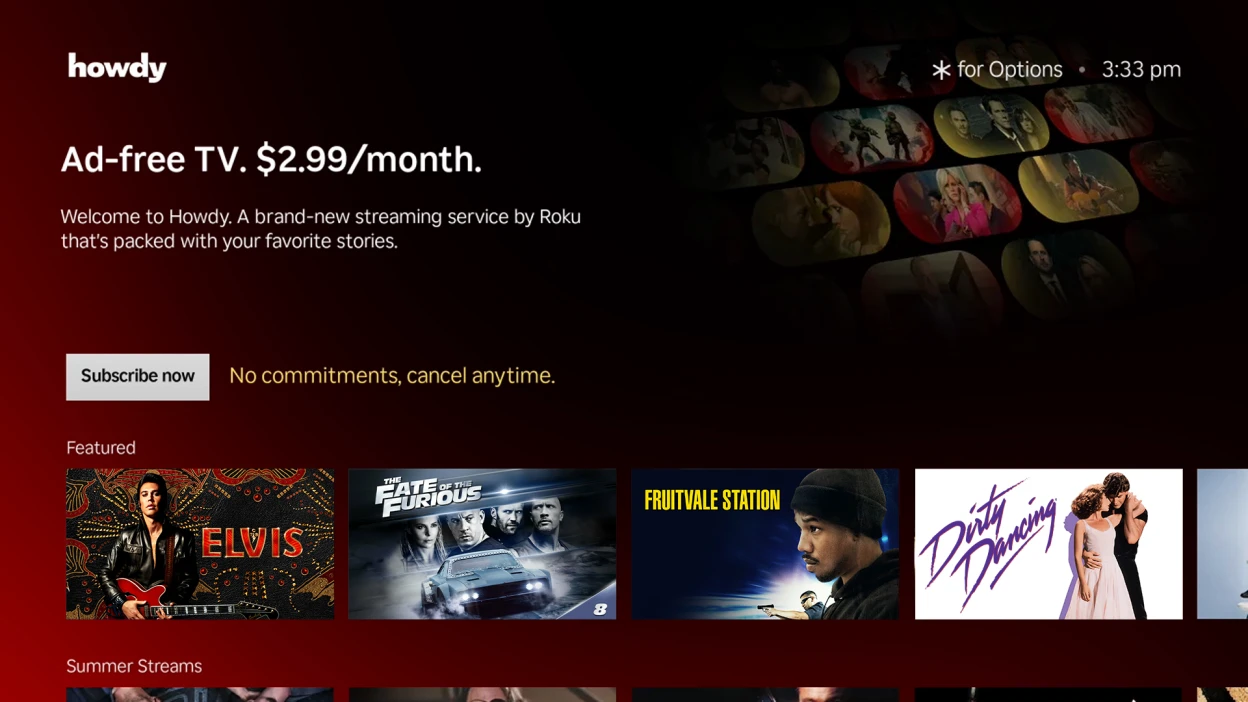
The Howdy TV experience
Designing a key feature
Why was this important?
I led the design for multiple features for the new app. One of the most important features for the business was the content details page - the screen that surfaces all information about a piece of content and drives the key user actions: viewing details, playing, saving, downloading and sharing.
We already had an understanding of how users interact with a similar page on the current Roku app, giving us a useful starting point.
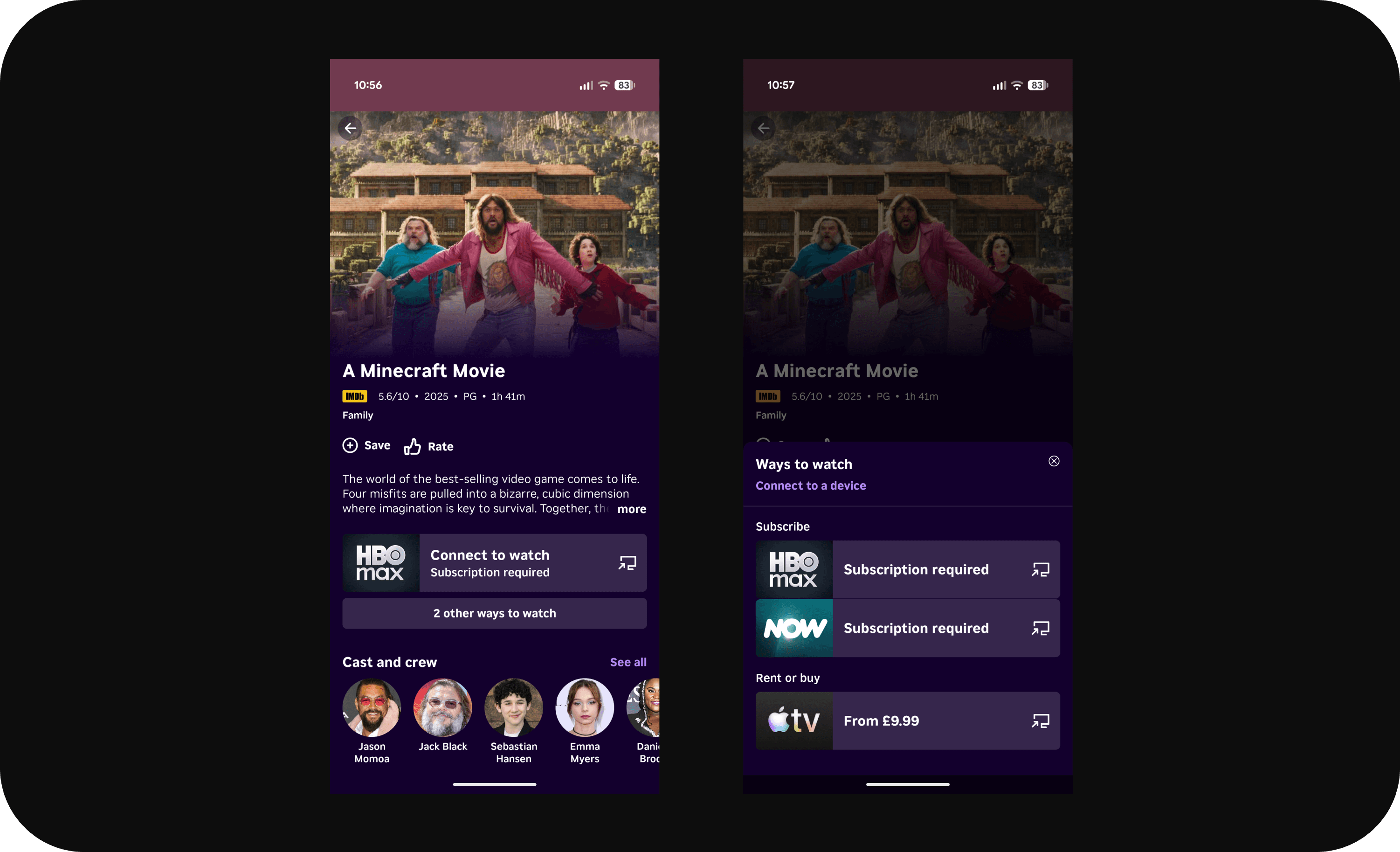
The current Roku app - we leveraged our understanding of user behaviour for Howdy
Design goals
The page needed to feel different from the Roku app, while matching the Howdy TV experience users were already familiar with. We had to stretch the existing design system, introducing new components and adjusting tokens to make that possible.
Howdy's user goals and content types are also different than the Roku app, so I used that as an opportunity to reduce complexity rather than carry over legacy patterns.
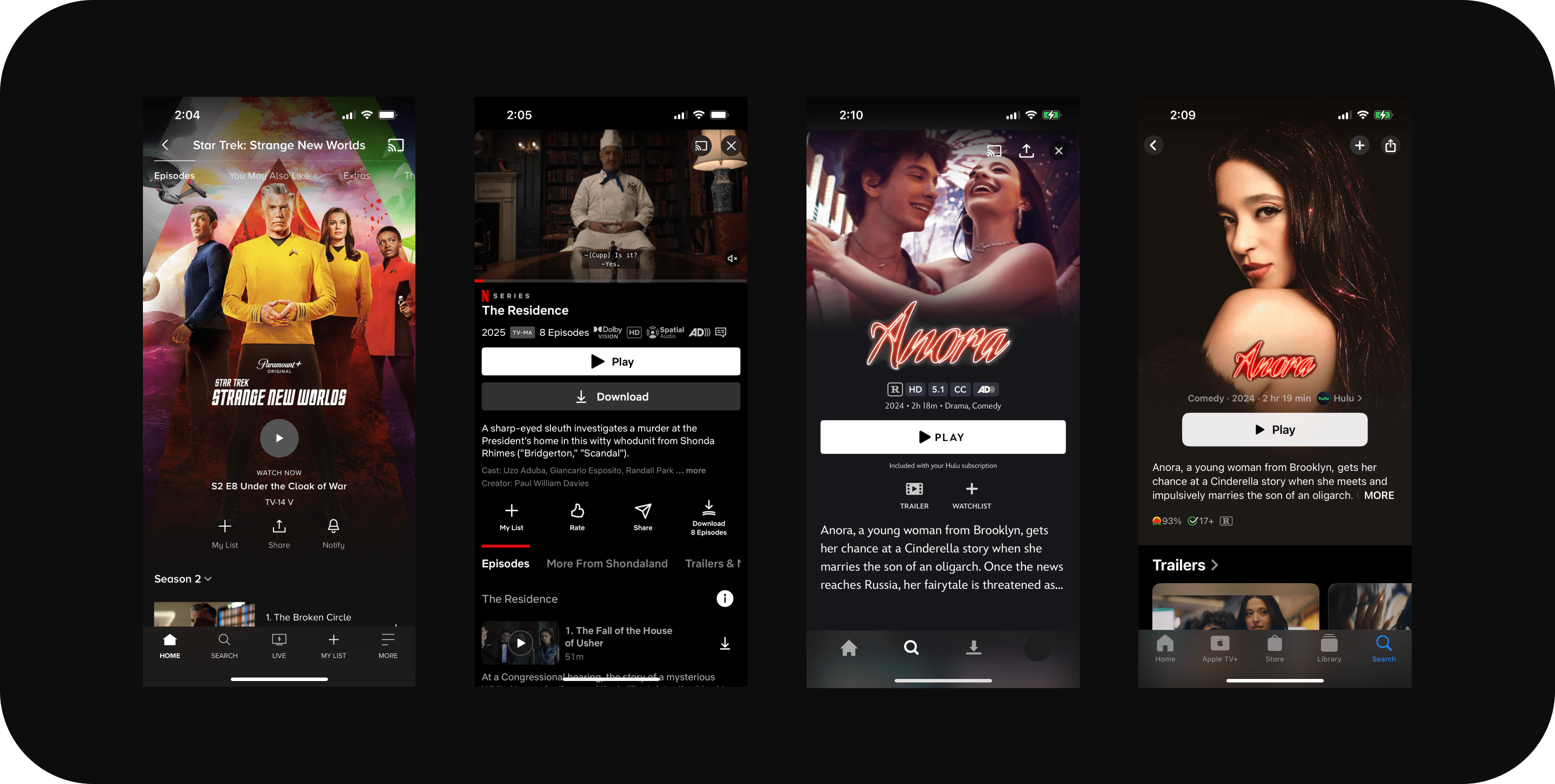
Benchmarking highlighted established patterns across similar pages
Process
The project started with a PRD from the product owner and we worked together with engineering to set the scope. The project culminated with a senior leadership review, but the path to get there involved:
Benchmarking: Content details pages are well understood across the industry, and I felt like it was important to align with these patterns to meet user expectations.
Feedback loops: I shared designs and prototypes regularly with stakeholders to ensure the experience was on track. Because of the technical limitations, it was important to have regular conversations with engineering.
Design system syncs: I needed to change certain tokens and components to achieve a fresh look and feel, and close collaboration with the design system team was essential to achieve this.
The Solution
Movies
Large artwork and bold typography sets the tone immediately, while the primary action is obvious and everything else is within easy reach.
We removed functionality from the current Roku app, such as choosing how to stream the content, to reduce complexity and fit Howdy’s user goals.

TV shows
The page needed an additional row to surface episodes clearly, but otherwise it remained visually and structurally consistent with the movie experience - important for users switching between content types.
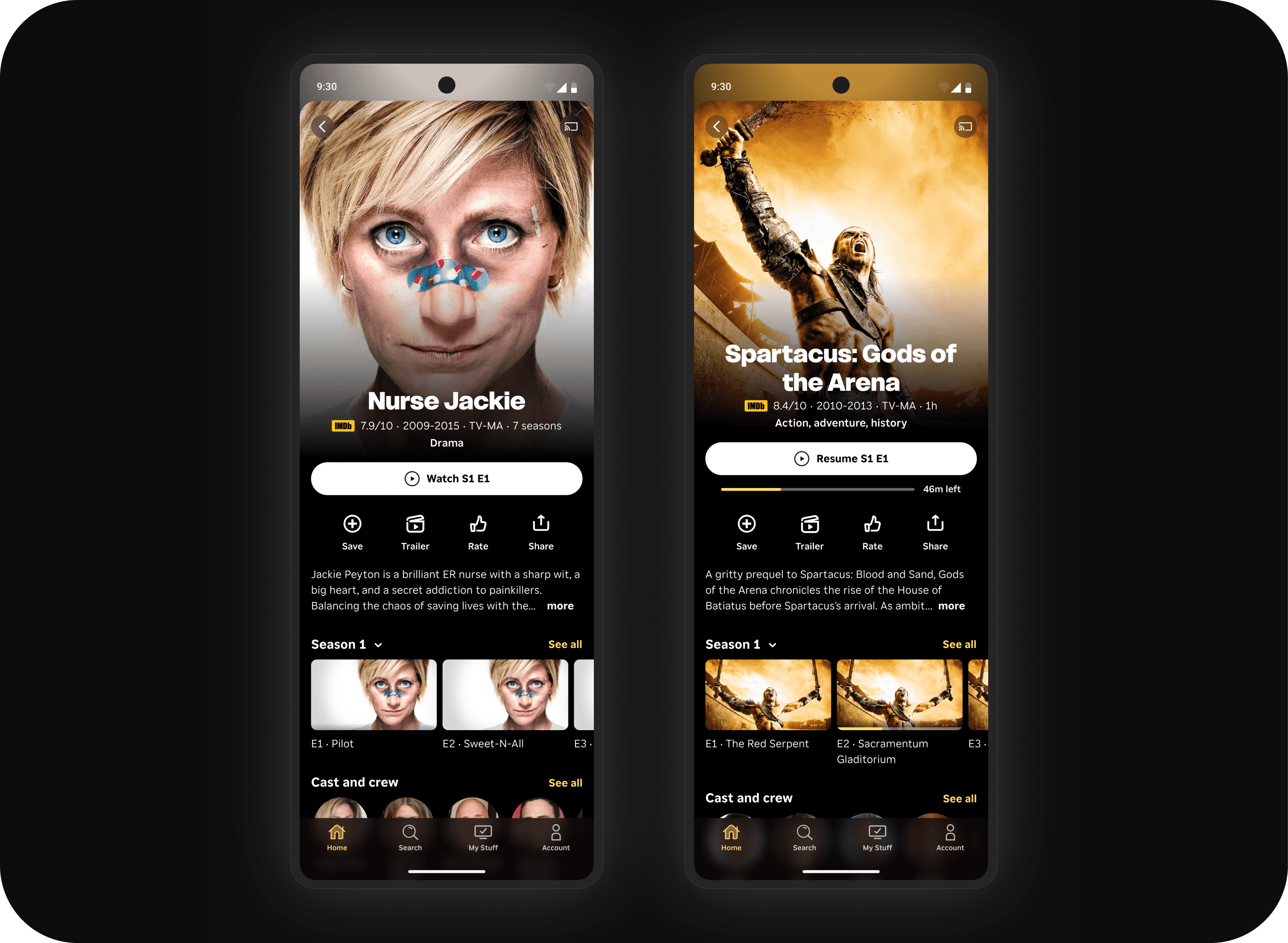
A new visual language
Beyond the screens themselves, two pieces of work contributed to the fresh visual language:
New components and styles: I worked with the design system team to add new components and variants for the icon action row and to show watch progress. This helps contribute to the fresh visual language while keeping consistency elsewhere in the system.

Colour thieving: Working closely with engineering, we implemented a colour thieving algorithm that samples the dominant colours from the content artwork and applies them as a gradient in the status bar above. This makes the entire page feel more visually balanced without a jarring colour transition.

Trade-offs
Not everything went as planned, and there were some decisions that needed a compromise:
Legacy behaviour: The existing app uses a bottom sheet when the like button is tapped - a pattern that felt clunky and dated. I explored alternatives, including a context menu, that would have provided a cleaner interaction. This was ultimately rejected as too complex to implement within scope, so we retained the bottom sheet.
Download functionality: Allowing users to download content for offline viewing was a feature we identified early as valuable, but it fell outside the scope of the initial release.
Animations and performance: The animations on the content details page didn't move beyond what existed in the Roku app, and some interactions felt slow as a result. Improving the motion design and performance was descoped due to timeline constraints.
Platform uniformity: We maintained a single consistent design across both platforms. This saved significant engineering time although at the cost of some platform specific conventions.
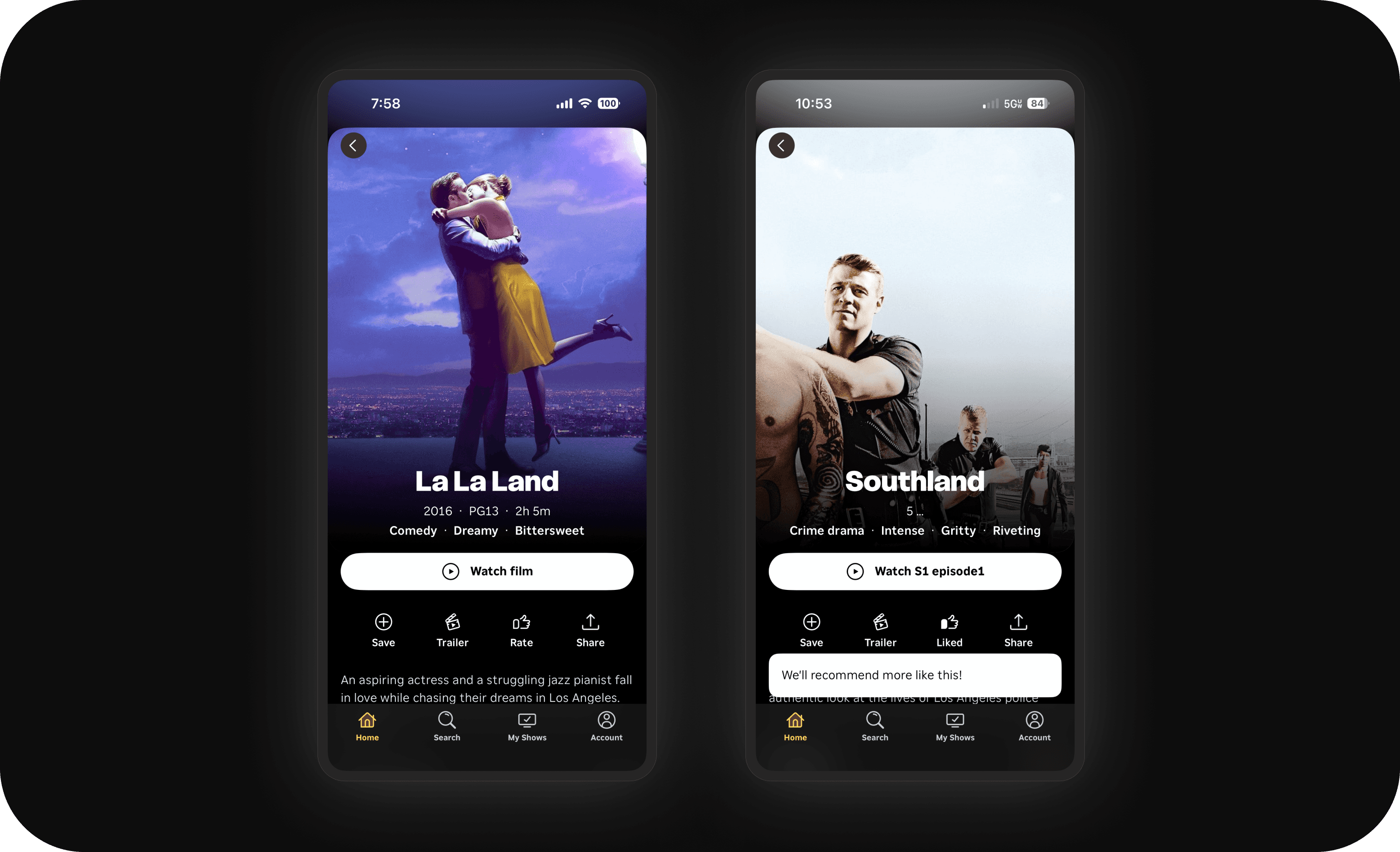
Not every feature was implemented, but the core experience shines through
Impact
It successfully passed senior stakeholder review meetings and shipped on schedule.
Achieved 4.6* on the App Store with strong user reviews.
Now used by 100,000s of users on mobile.